 Image 1 of 2
 Image 2 of 2
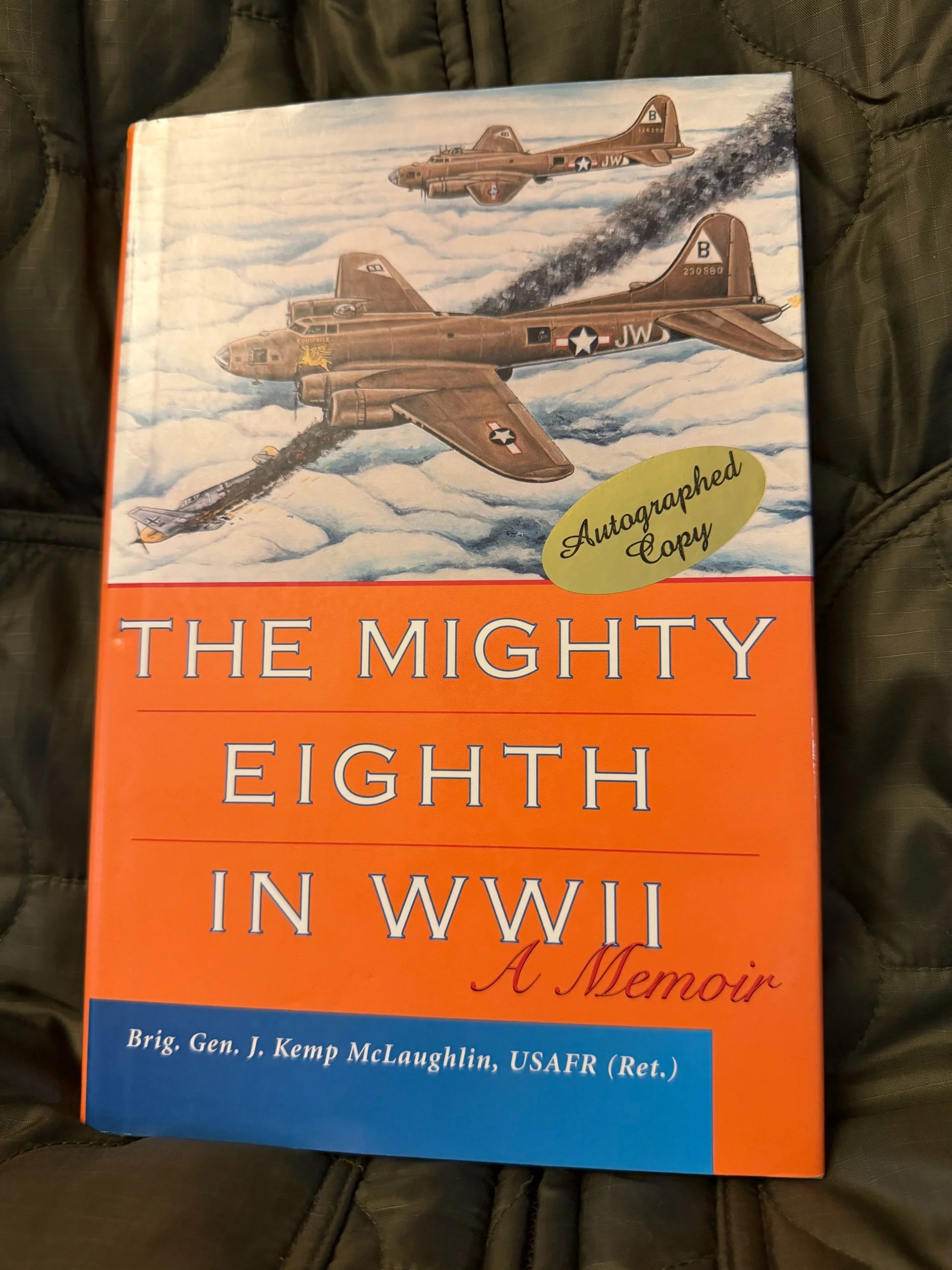
On an early morning in the fall of 1942, Kemp McLaughlin’s group set out for a raid on a French target. Immediately after dropping its bombs, McLaughlin’s plane was hit. A huge fire burned a four-foot hole in his wing, his waist gunner bailed out, his radio operator was wounded, the plane lost all oxygen, and his pilot put on a parachute and sat on the escape hatch, waiting for the plane to explode. And this was only McLaughlin’s first sortie.
McLaughlin went on to pilot the mission command plane on the second raid against Schweinfurt, the largest aircraft raid in history, which resulted in the destruction of 70 percent of German ball bearing capability. McLaughlin also participated in the bombing of heavy water instillations in Norway, returning to Scotland with one engine burning out and Messerschmitts in unrelenting pursuit. An especially long flight once left him out of fuel and over nurtural, where he crash landed with four generals on board, including the commander of the American forces in the European of operations.
The Mighty Eighth in WWII also includes the stories of pilots who were downed in France and Holland. They travelled under the cover of night through the countryside evading Germans who had seen their planes go down. The pilots found citizens willing to hide and help them and hide them, and they made their way through the underground networks of Europe in an effort to get back to England.
As a group leader, McLaughlin was responsible for the planning and execution of air raids, forced to follow the directives of senior (and sometimes less informed) officers. His position as one of the managers of the massive sky trains allows him to provide unique insights into the work of maintenance and armament crews, preflight briefings, and off-duty activities of the airmen. No other memoir of World War II reveals so much about both the actual bombing runs against Germany and the management of personal and material that made those airborne armadas possible.
On an early morning in the fall of 1942, Kemp McLaughlin’s group set out for a raid on a French target. Immediately after dropping its bombs, McLaughlin’s plane was hit. A huge fire burned a four-foot hole in his wing, his waist gunner bailed out, his radio operator was wounded, the plane lost all oxygen, and his pilot put on a parachute and sat on the escape hatch, waiting for the plane to explode. And this was only McLaughlin’s first sortie.
McLaughlin went on to pilot the mission command plane on the second raid against Schweinfurt, the largest aircraft raid in history, which resulted in the destruction of 70 percent of German ball bearing capability. McLaughlin also participated in the bombing of heavy water instillations in Norway, returning to Scotland with one engine burning out and Messerschmitts in unrelenting pursuit. An especially long flight once left him out of fuel and over nurtural, where he crash landed with four generals on board, including the commander of the American forces in the European of operations.
The Mighty Eighth in WWII also includes the stories of pilots who were downed in France and Holland. They travelled under the cover of night through the countryside evading Germans who had seen their planes go down. The pilots found citizens willing to hide and help them and hide them, and they made their way through the underground networks of Europe in an effort to get back to England.
As a group leader, McLaughlin was responsible for the planning and execution of air raids, forced to follow the directives of senior (and sometimes less informed) officers. His position as one of the managers of the massive sky trains allows him to provide unique insights into the work of maintenance and armament crews, preflight briefings, and off-duty activities of the airmen. No other memoir of World War II reveals so much about both the actual bombing runs against Germany and the management of personal and material that made those airborne armadas possible.